
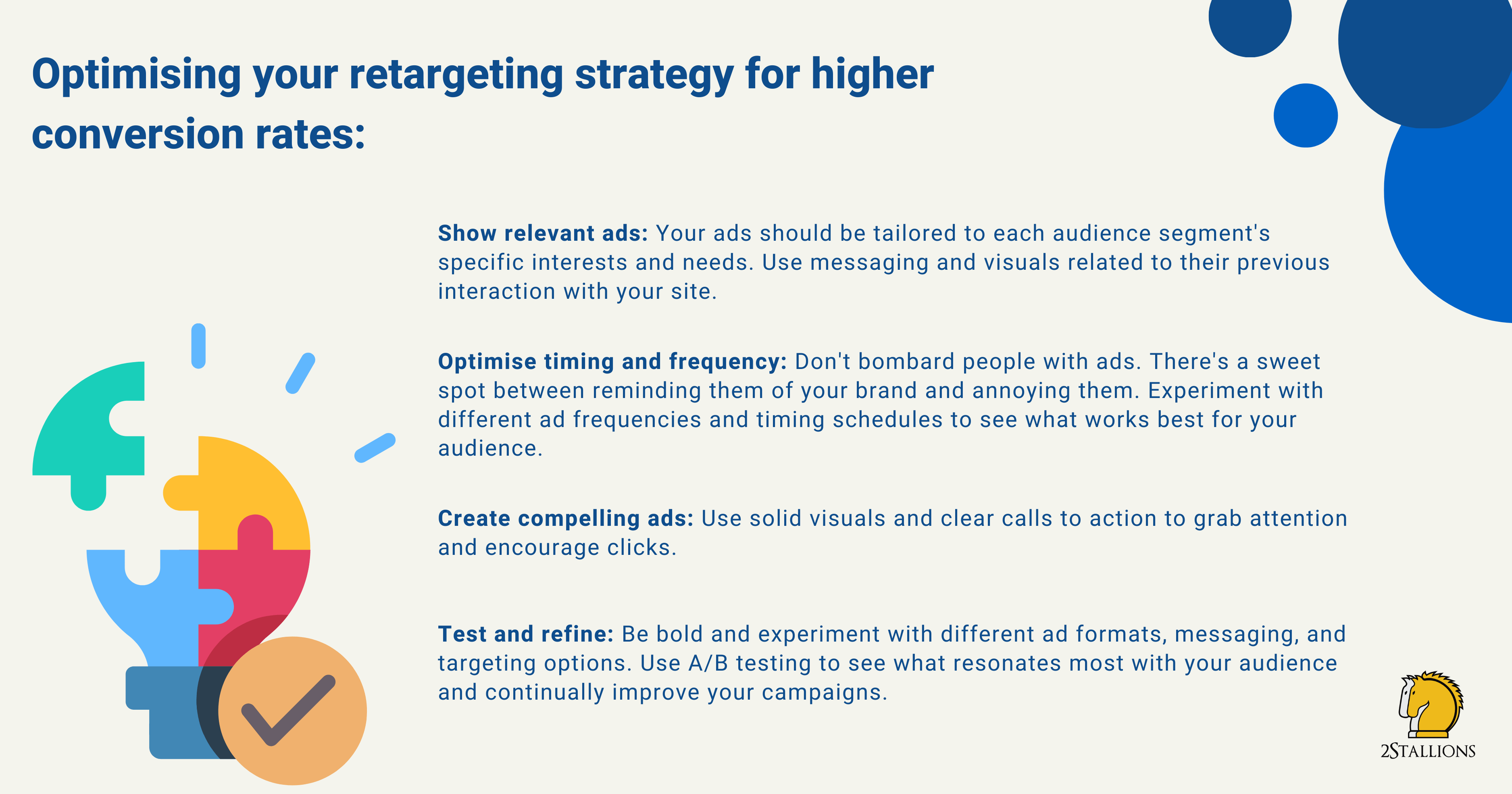

Building a truly effective retargeting campaign requires more than just showing ads to past visitors; it demands a nuanced approach that understands user behavior, segments audiences intelligently, and continually refines messaging. A robust retargeting strategy doesn’t just remind people about your brand; it nudges them closer to conversion by addressing their specific interests and pain points based on their previous interactions. This strategic effort is crucial for maximizing marketing spend and converting warm leads into loyal customers.

Overview
- Retargeting effectively recovers lost sales opportunities by re-engaging interested but unconverted visitors.
- Audience segmentation is fundamental, allowing for personalized messaging based on specific website interactions.
- Creative ad content and compelling offers are essential to drive action from retargeted users.
- Leveraging advanced platform features, such as frequency capping and sequential retargeting, optimizes campaign performance.
- Continuous measurement of key metrics and A/B testing are critical for refining and scaling your retargeting efforts.
- Integrating retargeting with your broader marketing strategy ensures a cohesive customer journey.
Defining Your Audience Segments for a Powerful Retargeting Strategy
The cornerstone of any impactful retargeting effort is precise audience segmentation. Rather than lumping all past website visitors into one generic pool, you should categorize them based on their specific actions and interests. This allows for highly personalized and relevant ad delivery, significantly increasing the likelihood of conversion. Think about users who visited a product page but didn’t add to cart, those who abandoned their shopping carts, or even those who viewed specific blog posts. Each group represents a distinct level of intent and requires a tailored message. For instance, a user who viewed a high-priced item might receive an ad highlighting financing options or a limited-time discount, whereas someone who read a blog about “beginner’s guides” might get an ad for a foundational product or a free trial. You can also segment by time spent on site, number of pages viewed, or even repeat visitors versus first-time visitors. The more granular your segments, the more powerful and cost-effective your retargeting strategy becomes, ensuring your budget is spent on the most promising leads.
Crafting Compelling Ads and Offers within Your Retargeting Strategy
Once your audience segments are defined, the next critical step is to develop ad creatives and offers that resonate deeply with each group. Generic ads will yield generic results. Instead, focus on specific pain points, benefits, and calls to action relevant to their previous interaction. For cart abandoners, a common and effective tactic is to offer a small discount or free shipping to overcome that final hurdle. For those who viewed a specific product category, show them related items or testimonials about those products. The ad copy should be concise, persuasive, and feature a clear call to action, whether it’s “Complete Your Purchase,” “Learn More,” or “Claim Your Discount.” Visuals are equally important; use high-quality images or videos that directly relate to the user’s past interest. Consider dynamic retargeting, which automatically pulls in the exact products a user viewed, making the ad highly personal. This targeted content strategy, where a user in the US might see an ad featuring a specific product they looked at yesterday, transforms a simple reminder into a strong push toward conversion.
Implementing Advanced Platform Features for Your Retargeting Strategy
Beyond basic ad serving, modern advertising platforms offer sophisticated features that can significantly enhance your retargeting strategy. Leveraging these tools is crucial for maximizing ROI. Frequency capping, for example, prevents ad fatigue by limiting the number of times a user sees your ad within a given period, ensuring your brand stays top-of-mind without becoming annoying. Sequential retargeting allows you to create a multi-step ad journey, showing different ads to users over time based on their engagement with previous ads or continued inaction. For instance, an initial ad might offer a discount, followed by an ad highlighting product benefits a few days later if they haven’t converted. Audience exclusions are another vital feature; you can exclude existing customers from seeing acquisition ads, or exclude recent purchasers from seeing retargeting ads for the product they just bought, preventing wasted spend and ensuring a positive customer experience. Integrating with your CRM can further personalize the experience, allowing you to show specific ads to leads based on their stage in the sales funnel, making your retargeting strategy highly efficient.
Measuring and Optimizing Your Retargeting Strategy for Success
A powerful retargeting strategy isn’t static; it’s an iterative process of measurement, analysis, and optimization. Continuously monitor key performance indicators (KPIs) such as click-through rate (CTR), conversion rate, cost per conversion (CPC), and return on ad spend (ROAS). These metrics provide insights into what’s working and what isn’t. A/B testing is indispensable here. Test different ad creatives, headlines, calls to action, and offer types across your various audience segments. For example, test whether a 10% discount performs better than free shipping for cart abandoners. Pay attention to how different segments respond and adjust your bids and ad spend accordingly. If a particular segment yields a high ROAS, you might allocate more budget to it. Conversely, if a segment is underperforming, re-evaluate its messaging or consider pausing it. Regularly review your audience segments for relevance and update them as your product offerings or customer behaviors evolve. This data-driven approach ensures your retargeting strategy remains agile, effective, and delivers consistent results over time.


